The dark pall once cast over postpartum depression is becoming a bright light.
The U.S. House of Representatives voted overwhelmingly Monday to approve the Melanie Blocker Stokes MOTHERS Act, which will help provide support services to women suffering from postpartum depression and psychosis.
It also will also help educate mothers and their families about these conditions. If passed by the Senate and signed into law by President Obama, the legislation will support research into the causes, diagnoses and treatments for postpartum depression and psychosis.
Blocker-Stokes was a Chicago native and pharmaceutical sales manager who, after the birth of her daughter, developed a psychosis that ultimately caused her to jump from a 12-story window ledge to her death on June 11, 2001.
The bill, if enacted, would require the secretary of Health and Human Services to expand and intensify research activities regarding postpartum depression and psychosis. The bill would also require additional support for basic and clinical research, epidemiological studies, diagnostic techniques and educational programs.
Tuesday, March 31, 2009
Mothers can finally see the light


Sunday, March 29, 2009
Testing for depression: social control or social necessity?
 Here's something that should stir the fear-of-socialism-mongering crowd into a frenzy:
An influential government-appointed medical panel is urging doctors to routinely screen all American teens for depression — a bold step that acknowledges that nearly 2 million teens are affected by this debilitating condition, according to The Associated Press.
Most are undiagnosed and untreated, said the panel, the U.S. Preventive Services Task Force, which sets guidelines for doctors on a host of health issues.
The task force recommendations appear in April’s issue of the journal Pediatrics. And they go farther than the American Academy of Pediatrics’ own guidance for teen depression screening.
An estimated 6 percent of U.S. teenagers are clinically depressed. Evidence shows that detailed but simple questionnaires can accurately diagnose depression in primary-care settings such as a pediatrician’s office, according to the AP.
The task force said that when followed by treatment, including psychotherapy, screening can help improve symptoms and help kids cope. Because depression can lead to persistent sadness, social isolation, school problems and even suicide, screening to treat it early is crucial, the panel said.
The task force is an independent panel of experts convened by the federal government to establish guidelines for treatment in primary-care. Its new guidance goes beyond the pediatrics academy, which advises pediatricians to ask teen patients questions about depression. Other doctor groups advise screening only high-risk youngsters.
Because depression is so common, “you will miss a lot if you only screen high-risk groups,” said Dr. Ned Calonge, task force chairman and chief medical officer for Colorado’s Department of Public Health and Environment.
The group recommends research-tested screening tests even for kids without symptoms. It cited two questionnaires that focus on depression tip-offs, such as mood, anxiety, appetite and substance abuse.
Calonge stressed that the panel does not want its advice to lead to drug treatment alone, particularly antidepressants that have been linked with increased risks for suicidal thoughts. Routine depression testing should only occur if psychotherapy is also readily available, the panel said. Calonge said screening once yearly likely would be enough.
The recommendations come at a pivotal time for treatment of depression and other mental health problems in children, according to the AP.
Recently passed federal mental health equity legislation mandates equal coverage for mental and physical ailments in insurance plans offering both. The law is expected to prompt many more adults and children to seek mental health care.
Yet at the same time psychiatrists specializing in treating children and teens are scarce. A separate report, also released Monday in the Pediatrics journal, says primary care doctors including pediatricians and family physicians will need to get more involved in mental health care.
That report is from the pediatrics academy and the American Academy of Child and Adolescent Psychiatry. The groups say pediatricians should routinely consult with child psychiatrists, including working in the same office when possible. And it says insurers should compensate pediatricians for any mental health services they provide.
Dr. Alan Axelson, a Pittsburgh psychiatrist who co-authored the second report, praised the task force recommendations and said pediatricians can play a key role.
Because children’s families often get to know their pediatricians, having those doctors offer mental health screening can help make it seem less stigmatizing, Axelson said.
Most pediatricians aren’t trained to do psychotherapy, but they can prescribe depression medication and monitor patients they’ve referred to others for therapy, he said.
Dr. Ted Epperly, president of the American Academy of Family Physicians, said his group strongly supports both Pediatrics reports.
While primary care doctors have full plates just dealing with physical ailments, many recognize the importance of providing mental health services — and many already do, Epperly said.
It isn’t always as time-consuming as it might seem; some screening questionnaires can be filled out by patients in the waiting room, Epperly said. Doctors can easily spot any red flags, according to the AP.
Friday, March 27, 2009
In a weak economy, the poor - not the rich - can set the best examples
 Can a weak economy be hazardous to your health - particularly your mental health?
Depends where you are.
If you worked for Bear Stearns, you probably found another job not too long after the company hit the skids. Having an education has benefits, certainly - even for those who are doomed to fail.
If you're working for AIG, you'll have a stimulus bill and $100 million bonuses to tide you over.
Then there's the Social Security offices around the country, the same places where the elderly and the poor pick up their benefits. They sit in lines for hours, their heads in their hands, waiting to be waited on.
Many of those I saw in New Brunswick, N.J. the other day, while doing classwork for Columbia University, looked like they were too old, too sick or too weak to work. With cutbacks in service jobs, they may never get another paycheck from somebody other than the government again.
Mostly, however, they had a certain strength about them that impressed me. They sat there, biding their time, not worrying about waiting and just trying to make the best of it.
They were getting government help, yes. But there were no complaints that it was not enough. There were no cries of panic that their lives would crumble if the government didn't up the ante.
Many of them were old - one of whom spoke to a younger man about growing up during the 1950s and 1960s, during the civil rights era. He and others had a sense of self-reliance and resiliency that they probably learned long ago, when they couldn't get jobs because of the color of their skin.
I sat there with my laptop, jotting down what one man was saying while talking to somebody who seemed about half his age:
"I played baseball - I remember, growing up, my mother couldn’t afford for me to buy a pair of spikes."
"We ate corn meal mush for dinner and lunch."
"In that era if you quit school, you had to go through a whole year and a half before you could be reinstated."
Before he went to the government for help, he said, he got a job. He didn't care how low-level or low-paying it was. It was work, and even though it made him sweat and curse, he went home with a sense of accomplishment. He felt empowered and emboldened.
"Somebody had to step up to the plate...I had to do what I had to do."
Sunday, March 22, 2009
Not quite a failing grade, but the nation's on academic probation
 From the National Alliance on Mental Illness:
The nation’s progress toward reforming public mental healthcare systems again has been given a “D” grade by the National Alliance on Mental Illness. NAMI first issued the Grading the States report in 2006 and released the 2009 update today, and it says those states that have worked the hardest to transform their systems could have gains wiped out as state governments face dwindling resources in the economic downturn.
NAMI says Oklahoma improved the most, with its grade rising from a D in 2006 to a B this year, and 13 other states also improved their scores. South Carolina had the greatest decline, falling from a B to a D, and 11 other states also slipped in NAMI’s rankings. Twenty-three had no change from 2006 to 2009. NAMI determines the grades based on 65 criteria. To see how your state scored, click here.
Among some of the findings in the latest report:
- SAMHSA has failed to promote uniform standards for collecting data at the state, county, and local levels;
- states are not focusing on wellness services for people with serious mental illnesses (SMI);
- states lack plans for developing and maintaining their mental healthcare workforces;
- consumers and families do not have adequate input in monitoring mental healthcare systems’ performance;
- and states are not considering the long-term housing needs of people with SMI.
"Nothing" is a book that is really something
 To celebrate the book's "Best of the Year" nomination from FOREWARD magazine, here is a reprint of last year's blog on "Nothing:"
Many popular novelists have a formula: For Tom Clancy, it's military intrigue. For John Grisham, it's law and injustice. Elmore Leonard draws on his law enforcement background to explore a criminal underworld that's painfully dysfunctional at its core.
Many novelists sell because of their predictability, as well as their prestige. Their work is put together like a Hardy Boys Mystery novel - or, better yet, a McDonald's cheeseburger - where each one has the same flavor as the last. Few have the Hemmingway gift of producing literature so distinctive that each new piece appears as though more than one author is behind the work.
Lurking behind the mega-rich novelists are a host of up-and-coming authors who have audiences that are not nearly the size of a Stephen King's - yet - but their topics are so diverse that each new novel is more of a surprise than it is formulaic.
One such author is Robin Friedman, who has written a series of critically acclaimed children's and young-adult novels that explore the trivial - though often humorous - experiences of kids as they grow up.
Her next book, "Nothing," which will be released in August, is a slight diversion from that, largely because it opens the door to a more serious topic that's rarely explored in any form of media: Male eating disorders.
What's amazing is that - despite the fact that her previous work did not dig deep into the convoluted psychology of youth - "Nothing" is able to capture the dark and light elements of an illness that would be tough for anyone to describe, including the people who live it.
And Friedman even admits to being surprised herself because men, or boys, are not typically associated with an illness that's more closely associated with women - and nearly glamorized by female stars such as Nicole Richie and Mary Kate Olsen.
"When I tell people I have a book coming out about a boy with bulimia, they are very, very surprised," Friedman said. "Most people, including myself, were not aware that men and boys could suffer from eating disorders."
I've known Robin for 22 years, and she has a gift for comic timing in her storytelling that would make any stage actor envious. Indeed, she's practically "Seinfeldian" in her ability to demonstrate the qualities of people that are unique, idiosyncratic and, in many ways, downright funny.
"Nothing," however, shows how Friedman has the ability to easily crossover into another, more serious topic without losing her voice - particularly her ability to peer into the human soul and discover what's uniquely compelling about each individual.
"It was a challenge for me to present this story from the point of view of my main character, 17-year-old Parker Rabinowitz, because it's told in first person in his voice," Friedman said. "And, like all of the other characters in the book, Parker does not know, nor understand, what's happening to him — why he's binging, why he's purging, what it means, what it is, what the consequences will ultimately bring."
Yes, the subjects are young adults, or teenagers, who are the typical characters in Robin's novels. But they're not prepping for a casting call on "High School Musical." They're not the players in another simplistic "ABC AfterSchool Special" that explores - yet again - the dangers of smoking and taking drugs.

No, Friedman's novel explores the dark, though complex world of male eating disorders while digging up the complexities of people who could fit the prototype of the typical teenager - or, the prototype of what a teenager should be like. But, in reality, they don't.
Indeed, Friedman gives these characters more credit than that. They're young adults with adult problems. And they're problems that are not typically associated with age, socio-economic class and, in particular, their gender.
Parker, for one, confronts eating disorders with the vulnerability of a teenager, but he also shows the insecurities - and even the maturity - of someone who is 10 years older than him. His struggles bring him down, but also help him grow.
"It was also important to me to present bulimia in all its complexity," Friedman said. "My research showed eating disorders aren't about food, but about control. I needed to create a sadly familiar world of modern teenage pressures, in which competitiveness, stress, the need for approval from others, and the pursuit of unattainable perfection can wreak total, tragic havoc on a seventeen-year-old's body and soul, in ways that last a lifetime."
Friedman credits me for being an inspiration for the book. Prior to 2004, we hadn't seen each other in nearly two decades, but a coffee-shop get-together and reminiscing led to stories of my own struggles with eating disorders that began in college.
As I told her the stories, I could see her connecting in a way that displayed a combination of humility, empathy and sympathy - a rare trait for anybody in a society that's too busy to communicate in ways that are more complex than a one-sentence e-mail.
Robin, in fact, is on a short list of people in, say, the history of my life who, I believe, have connected with me on an emotionally deep level. She has a sincerity - as well as a raw and honest, but affecting laugh - that can put the most unrefined person at ease.
Perhaps that's why I'm not surprised that she, through her writing, was able to make something out of a life that was seemingly "nothing."
New life for postpartum depression legislation
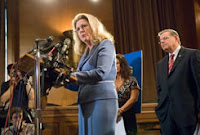 By SUSAN DOWD STONE
Featured Blogger
Perinatal Pro is creating a state-by-state listing of ALL regional organizations, healthcare facilities, entities, blogs, websites, consortias and public and private agencies who wish to go on-record in support of critical postpartum legislation. If you would like to be added to the listing, please email me at susanstonelcsw@aol.com. It will be updated several times a week. Please note, this listing is public and will be sent to Congress the week of MOTHERS Day.
Here's the blog:
Great news from Randy Gibbs, Executive Director of Jenny’s Light, brother of Jennifer Gibbs and uncle of Graham Gibbs, that this amazing organization is endorsing the Melanie Blocker Stokes MOTHERS Act.
Based in Minnesota, Jenny’s Light is a not-for-profit organization created by the families of Jennifer and Graham Gibbs Bankston in response to their tragic, unnecessary deaths from postpartum illnesses. The mission of Jenny’s Light is to improve and save lives by increasing awareness of all perinatal mood disorders including postpartum depression.
As support for the legislation widens and deepens among our nation’s professional and non profit organizations, we would also like to hear from regional, public and private entities who wish to go on record in support of this legislation. Perinatal Pro intends to create a new state by state listing on this website of all organizations, blogs, consortia, websites and/or practices who want to proclaim their support for this legislation. We need to intensify our message to Congress that investment in America’s mothers and infants must remain a top priority, especially amidst challenging times which create additional stressors for our nation’s families.
2007 was a year of record births in this country at over 4.4 million. We need to be sure the systems are in place to support these mothers, infants and families, by raising awareness, educating providers and establishing accessible help networks in every community across America.
If you would like to see your organization listed here, please email me with the name and contact person in your organization.
Meanwhile, if you haven’t already, please sign the petition in support of The Melanie Blocker Stokes MOTHERS Act.
Also:
Representative Jessica Farrar has introduced a new bill to the Texas Legislature which would limit jail time for mothers who commit infanticide while suffering from postpartum psychosis. While enactment of this bill does not replace or affect the appropriate use of the insanity defense for such crimes – a defense which can eliminate jail time while mandating appropriate psychological treatment - it would limit jail time during the penalty phase of a trial for infanticide presented under manslaughter or murder charges. The option would apply to mothers deemed to have been under the influence of a pregnancy or lactation related mood disorder within 12 months of giving birth.
George Parnham, the Houston based attorney who defended Andrea Yates, helped draft the legislation and I was honored to serve as an advocacy consultant. You can read the story which broke in Sunday’s Dallas Morning News by Wendy Hundley.
There is one misquote in the article that is important to correct. Instead of “for every mother who receives treatment, there are ten who are in jail”, that statement should have read, “For every mother whose trial results in psychological treatment only, there are ten who may receive jail time under the current legal mandates”.
Providing this new option to jurors during the penalty phase following conviction would offer an opportunity to reduce jail time and increase likelihood of psychological treatment – a far more appropriate response. By its very existence this legal option would further decriminalize acts related to maternal mental illness, validate the suffering of these mothers and help turn the tide from ignorance to understanding and appropriate treatment.
While many other civilized countries in the world already have an infanticide defense that does NOT include jail time, the United States continues to lag behind in our legal and social understanding of these disorders. Efforts are underway on the state and federal level, such as The Melanie Blocker Stokes MOTHERS Act, to initiate public awareness campaigns, conduct more research and offer assessment, support and screening to mothers during and after pregnancy. The bill was reintroduced to the 111th Congress by U. S. Senator Robert Menendez in the senate and Congressman Bobby L. Rush in the House of Representatives this past January.
Postpartum psychosis is an extremely rare (less than 1 in a thousand) condition in which a mother may be susceptible to “command hallucinations”, i.e. auditory or visual hallucinations which may order her to kill her children in order to save them and her family or prevent evil. This condition presents a true psychological emergency and immediate treatment is required to prevent the possible advancement of the illness that could result in tragedy.
Because such psychotic hallucinations may continue for days at a time and result in the planning of death, it is difficult for a considering jury to believe the mother is truly insane feeling that “insane people are not logical and could not execute a step by step plan”. It is this misunderstanding of the course and content of psychotic illness which often brings such outrage and condemnation to the convicted mother during penalty phase of deliberating jurors, resulting in jail terms equivalent to that for intentional murder or manslaughter.
One method of determining psychosis is a mother’s own response to such troubling thoughts, feelings and urges. A woman with the more common postpartum depression, for example, may have thoughts of harming her baby or herself, or wishing to give the baby up for adoption, or wishing it had never been born, but she is deeply troubled and repulsed by these feelings and usually does not act on them. These mothers can find help and relief from intrusive or obsessional ideas through psychotherapy, medication, social support or all three together. On the other hand, a woman with the extremely rare form of postpartum psychosis believes these hallucinations are real, that the commands must be followed and is therefore more likely to act on such thoughts.
The proposed bill is not perfect. It would be preferable that psychological help and treatment be the only “penalty” for the mother who creates a crime while suffering from the severe incapacitation of a pregnancy related mental illness. But its submission to the Texas legislature marks a critical first step toward ending ignorance and acknowledging the reality, characteristics and attributions of postpartum mood disorders to nation of lawmakers and citizens who often have great difficulty accepting more realistic concepts of culpability in mentally ill mothers.
Many thanks to Representative Jessica Farrar and attorney George Parnham - both members of the President’s Advisory Council of Postpartum Support International, for continuing to champion legal process and precedents for women suffering from postpartum illnesses. It takes great strength of character and forceful commitment to weather storms of public outcry that may emerge as a nation searches its soul and moves toward empathic understanding of maternal mental illness.
Tuesday, March 17, 2009
Shaking the rust off
 Every night, around 9 p.m. or so, I was always the last one around in The Press of Atlantic City's Manahawkin office.
This was 1993, when the newspaper had a Manahawkin, N.J. office (R.I.P.).
My only available neighbor was a Wawa. The street, Route 9, had no lights for a quarter-mile stretch. All I saw through the front door window was blackness.
Too tired to go home, I often pretended I was somewhere else. Or doing something else. Usually, I was a pitcher; I'd grab one of the ad exec's fuzzy dice that she always had lying on her desk, stare at my reflection in the pitch-black door and hurl a few curve balls at the glass.
I snapped my wrist and watched the fuzzy dice swoop out, then loop in, almost always for a strike. Or so I dreamed.
I'd strike the side out, and then, I'd stop, sit in my chair, stare at The Associated Press scroll of stories on my screen and dream again.
I dreamed I was a big time reporter at a big newspaper. I dreamed I didn't have go to Tuckerton, N.J. Council meetings anymore, writing stories about a rash of sewer backups in the bay beach neighborhoods or debates between oddball school board members.
Then I'd feel a chill and think, shit, can we go back to the baseball player?
With the baseball player, at least, I knew I never had a shot. As much as I thought I was looking at Tom Seaver's reflection in the door glass, I knew I was just Tom Davis, the kid who got cut from the freshman baseball team.
Being a big-time reporter always seemed to be within my grasp. It always seemed to be within reach, only slipping through my hands with every job interview, even as I broke news stories, beat the competition and won awards that put me ahead of my peers. But it was all an illusion; in 1993, I was about as close to getting a job at The Times as I was sitting in the dugout, sharing golfing tips with Vince Coleman and pitching for a 59-103 Mets team.
Sixteen years later, I'm happy with the way my career has turned out. Sometimes, I wonder, as I watch newspapers fall like dominos: What would it have been like if I was born at a different time? Would I have landed that foreign correspondent position that I always wanted at The New York Times (I used to say, back in the 1980s, I envisioned myself at a Times or AP reporter, dodging bombs in Beirut)?
But when I look at other newspapers, and see what's happening to them, I lose the dream and wake up to reality. I work for a newspaper that's in business - and is doing comparatively well. The staff has and, even after downsizing and restructuring, remains (comparatively) a close-knit bunch.
I have a newspaper on my resume that doesn't exist anymore. Where would I be if I had stuck around?
The Record allowed me to create a military beat after 9-11. I dreamed up my own feature strories connected to the wars in Afghanistan and Iraq, with a lot of leeway given. I wrote a column on mental health issues that got me a fellowship with the Carter Center's Mental Health program. The newspaper not only allowed, but encourage me to write a story on my mother's death in 2003, the end of a life beseiged by mental illness.
Getting the feedback from the readers, whether good bad or indifferent, has always been the best part. The good gives you that shot of confidence and ego boost every writer needs. The bad can be instructional, excrutiatingly painful, but often amusing and entertaining. Either way, you rarely feel lonely, always in touch with a public that, on some level, is connecting.
Sometimes, I cover baseball games. The closer I get to the game, and see all of its warts close-up, the happier I am that I never turned into a jock.
Whatever happens in the future, I can be satisfied that I lived this dream, the dream of being a reporter, at a time when it was still possible to do so.